Blog → Producer interview workflow
If you’ve worked in long-form or broadcast, you already know how interviews are turned into edits.
You watch material, pull selects, build a structure with timecodes and then feed that into the edit.
The challenge isn’t knowing what to do — it’s how long it takes.
Most tools still assume that process starts in the timeline.
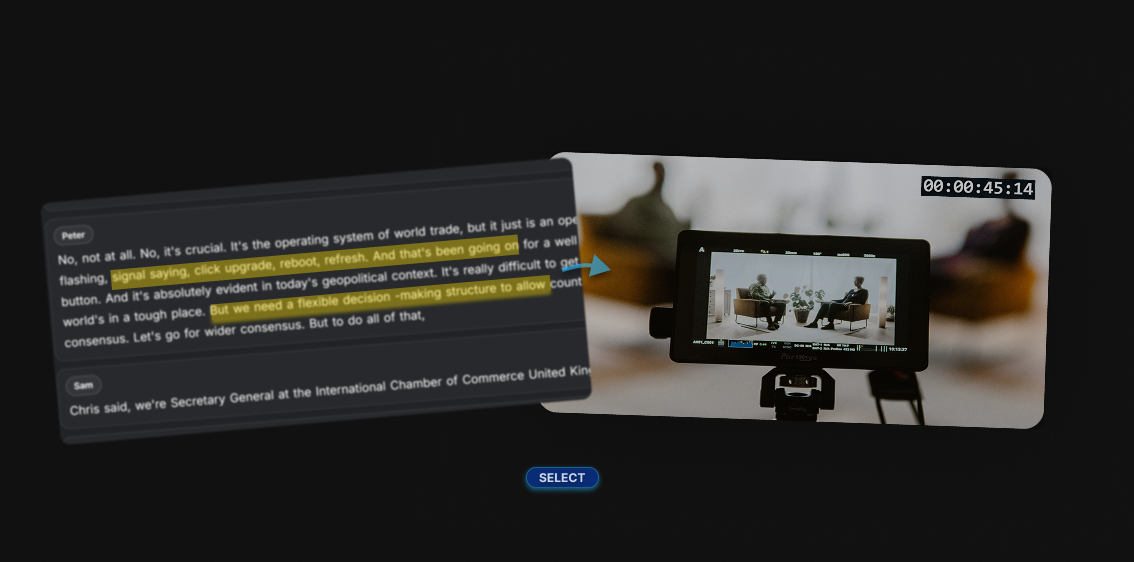
Workflow
The reality of interview workflows
In most productions, the edit doesn’t start with the editor.
It starts earlier.
- review interviews
- pull key quotes
- build a rough structure
- shape the story before the timeline is even opened
This stage is where the first storytelling decisions take shape.
The bottleneck
Why this stage is still slow
At this stage, if you don’t have access to transcripts or an editing system, the process usually means:
- shuttling through hours of footage
- jumping between notes and footage
- typing out a rough transcript
- manually recording timecodes
- repeating the same passes multiple times
It’s a slow process — and the quality of the edit often depends on how well this stage is handled.
What you're actually doing
This isn’t editing — it’s shaping the story
At this stage, you’re not choosing shots.
You’re:
- finding meaning
- selecting moments
- building narrative
- understanding what you have
It’s closer to writing than editing — and it’s where the story actually takes shape.
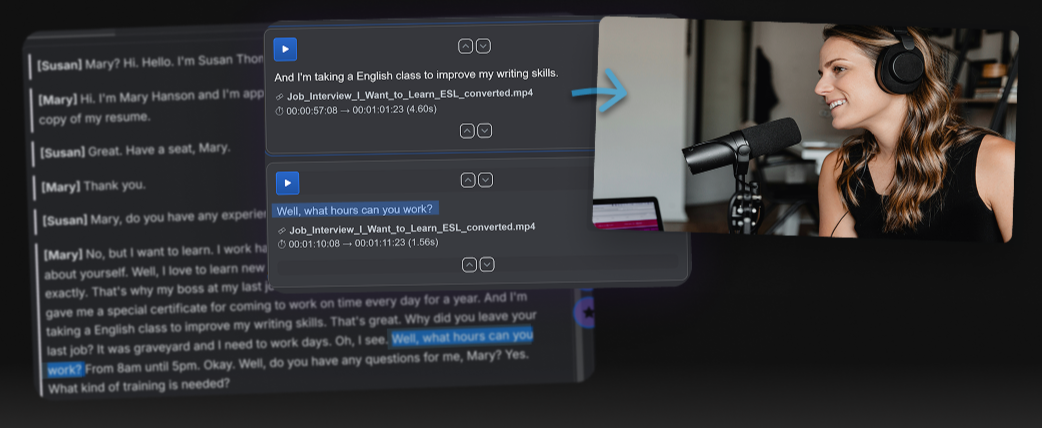
A different approach
A transcript-first workflow
A transcript-first workflow gives you a head start.
Working from a transcript changes how you approach the material entirely.
- you read instead of scrubbing through footage
- you highlight key moments
- you structure content before the edit begins
- you can review material without opening a timeline
- you have accurate timecodes for every selection
Learn more about this approach in our guide on editing video from a transcript.
Feeding the edit
From selects to timeline (AAF workflow)
Once the structure is there, the goal becomes simple:
Feed the edit.
That means taking structured selections and turning them into something the editor can use immediately.
This is where formats like AAF matter.
They allow structured selections to move directly into professional editing systems without rebuilding the edit manually.
- structured sequences
- time-accurate selections
- something that drops directly into the edit system
For workflows using tools like Avid or Premiere, this bridges the gap between producer and editor.
Instead of sending notes or script, you’re sending something the editor can work with immediately.
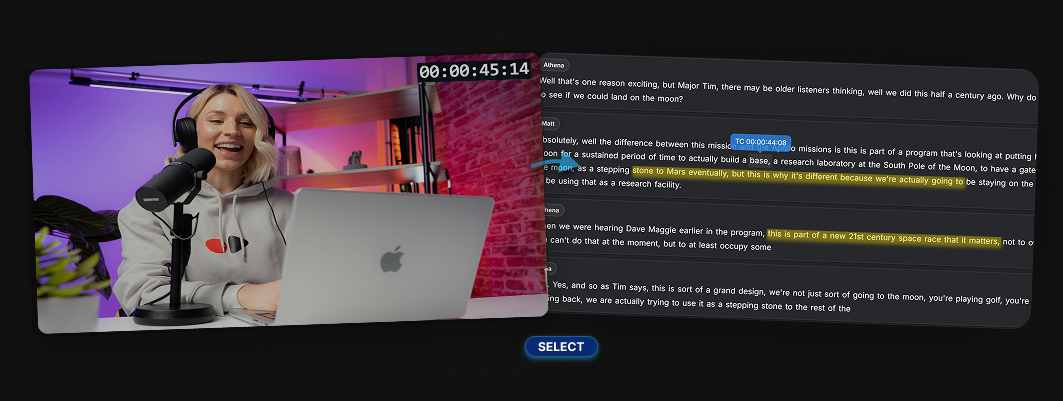
Where Fabel fits
Built for the stage before the edit
Fabel is designed specifically for this stage — shaping edits from transcripts before the timeline work begins.
- work directly from transcripts
- highlight text to create structured selections
- build edits before the timeline
- review material on desktop or mobile
- create a timecoded script
- export to video / audio or AAF
It doesn’t replace the edit.
It makes everything leading up to the edit faster.
Try this workflow
Shape interviews before the timeline
If you're working with long-form interviews, this approach can save hours on every project.